
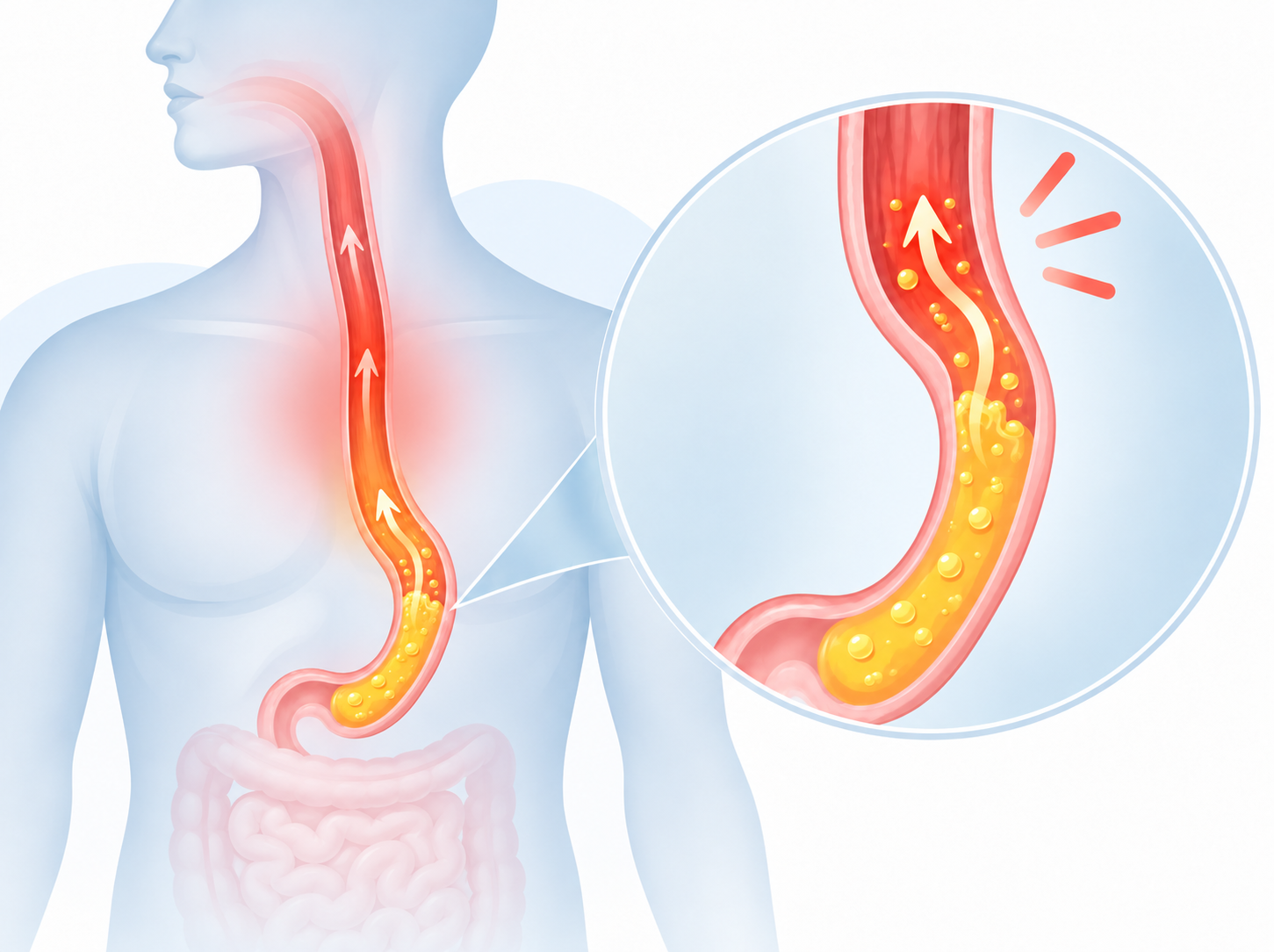
Gastric sleeve surgery can be an effective treatment for obesity, helping patients lose significant weight and improve their health. Unfortunately, some patients develop an unexpected problem after surgery: persistent or severe acid reflux.
For some, that means waking up at night coughing or choking, experiencing burning in the chest, regurgitating food or stomach contents, or relying on daily medications just to control their symptoms.
These symptoms can be frustrating, particularly for patients who have otherwise been successful with their weight-loss surgery.
The good news is that severe GERD after sleeve gastrectomy can often be treated, and for selected patients, conversion to gastric bypass may provide substantial relief.
Why Can Acid Reflux Develop After Gastric Sleeve Surgery?
Sleeve gastrectomy changes the stomach from a relatively large reservoir into a narrow, tube-shaped structure.
This smaller stomach can function as a higher-pressure system, making it easier for stomach contents to reflux upward into the esophagus.
Other anatomical changes may also contribute, including:
- A hiatal hernia, which occurs when part of the stomach moves upward through the diaphragm.
- Narrowing or twisting of the gastric sleeve, which can increase pressure and interfere with normal emptying.
- Changes to the normal anti-reflux anatomy at the junction between the esophagus and stomach.
These factors help explain why some patients develop reflux for the first time after sleeve gastrectomy, while others experience worsening symptoms that were previously manageable.
When Does Reflux Become a Serious Problem?
Occasional heartburn does not necessarily mean revisional surgery is needed.
However, patients should seek medical evaluation when reflux becomes frequent, interferes with sleep, causes regurgitation, or persists despite appropriate medical treatment.
Long-standing reflux can damage the esophagus. Potential complications include:
- Esophagitis: Inflammation and irritation of the esophageal lining.
- Esophageal stricture: Scar tissue that narrows the esophagus and can make swallowing difficult.
- Barrett’s esophagus: Changes in the esophageal lining associated with an increased risk of esophageal cancer.
Importantly, the severity of reflux symptoms does not always reflect the degree of esophageal injury. Some patients can develop significant inflammation or Barrett’s esophagus without severe heartburn.
For this reason, patients who have undergone sleeve gastrectomy should discuss appropriate endoscopic follow-up with their bariatric surgeon.
What Happens During an Evaluation for GERD After Sleeve Gastrectomy?
The first step is determining why reflux is occurring and whether surgery is appropriate.
An evaluation may include:
- Reviewing symptoms, current medications, and the original bariatric operation.
- Upper endoscopy to examine the esophagus and stomach.
- Imaging to evaluate the shape of the sleeve and identify problems such as a hiatal hernia.
- Esophageal acid testing or other studies when necessary.
Many patients can be treated with medications or other interventions. However, when reflux remains severe despite appropriate treatment, revisional surgery may be considered.
How Can Conversion to Gastric Bypass Help?
For patients with persistent or severe GERD after sleeve gastrectomy, conversion to Roux-en-Y gastric bypass is an established surgical treatment option.
The reason gastric bypass can improve reflux is related to how it changes the anatomy.
A gastric sleeve is a narrow, relatively high-pressure stomach. Gastric bypass creates a much smaller, generally lower-pressure pouch that produces less acid.
The intestinal reconstruction also separates the new stomach pouch from much of the acid-producing stomach and routes bile and pancreatic secretions away from the pouch and esophagus.
Together, these changes can significantly reduce reflux.
Many appropriately selected patients experience substantial improvement following conversion to gastric bypass. However, no operation guarantees complete symptom resolution, and the potential benefits must be weighed against the risks of revisional surgery.
Is Conversion to Gastric Bypass Right for Everyone?
No. Not every patient with reflux after sleeve gastrectomy needs another operation.
The decision depends on symptom severity, response to medications, findings on endoscopy or imaging, overall health, and prior surgical history.
When surgery is appropriate, the objective is not simply additional weight loss. For patients undergoing revision because of severe GERD, controlling reflux and preventing further esophageal injury may be the primary goals.
An individualized evaluation is essential to determine the most appropriate treatment.
Revisional Bariatric Surgery at UAMS Health in Bryant, Arkansas
Dr. Samuel Bledsoe is board-certified by the American Board of Surgery and holds a Focused Practice Designation in Metabolic and Bariatric Surgery.
He performs revisional bariatric procedures, including conversion from sleeve gastrectomy to Roux-en-Y gastric bypass for severe GERD, at UAMS Health in Bryant, Arkansas. Learn more about Dr. Bledsoe’s bariatric and revisional surgery services at UAMS Health in Bryant.
Patients from Little Rock, Bryant, Benton, and throughout Arkansas who experience persistent reflux following gastric sleeve surgery can schedule a consultation to discuss their symptoms and available treatment options.
During the initial evaluation, Dr. Bledsoe reviews the patient’s surgical history, symptoms, previous treatments, and any available testing to determine what additional evaluation or treatment may be appropriate.
Request a Consultation
If you are experiencing persistent reflux after sleeve gastrectomy, we recommend beginning with our secure UAMS insurance verification form. Our team will review your benefits and aim to contact you within 72 hours to discuss coverage and next steps.
Verify Insurance & Request Consultation
Interested in seeing Dr. Bledsoe? You can select him as your preferred surgeon when completing the form.
Prefer to call? (501) 252-6650
Persistent reflux after gastric sleeve surgery should not be ignored. If symptoms continue despite treatment, an evaluation can help determine whether revisional surgery or another approach may provide relief.
READY TO EXPLORE WEIGHT LOSS SURGERY?
Start by checking your insurance benefits through UAMS Health in Bryant. Our team will help you understand your coverage and next steps.
Prefer to speak with someone? Call (501) 252-6650